Catch-up (November 17th, 2016)
I've finally managed to complete the White Heron blog- it took awhile because I had so many great photos and it was hard to choose which ones to include.

The main reason we returned to the West Coast so soon after our disastrously wet winter visit was to take a tour to a very special and magical place deep within the Waitangiroto Nature Reserve near Whataroa. A tour to where the only known nesting site of the White Heron/Kotuku in New Zealand is located, on the banks of the Waitangituna Stream.

Access to the nesting site is restricted and tours can only be taken with one company, White Heron Sanctuary Tours, they have a DOC concession to take limited numbers of people and tours to the site. We based ourselves at the rustic 'campground' behind the pub in Whataroa so we could choose a suitable day weather-wise (based on the rain we'd had so far!) and tour time.

It was a good move, we had one clear day in the middle of a week of rain. And after finding out that there was a full load of 12 people on our original tour, we changed our time from early afternoon to late, when there was just the 5 of us. We boarded the minivan at the tour company's office in Whataroa and were then taken on a 20 minute drive along gravel roads, through farmland and native bush to connect with the jet-boat on the Waitangitaona River.

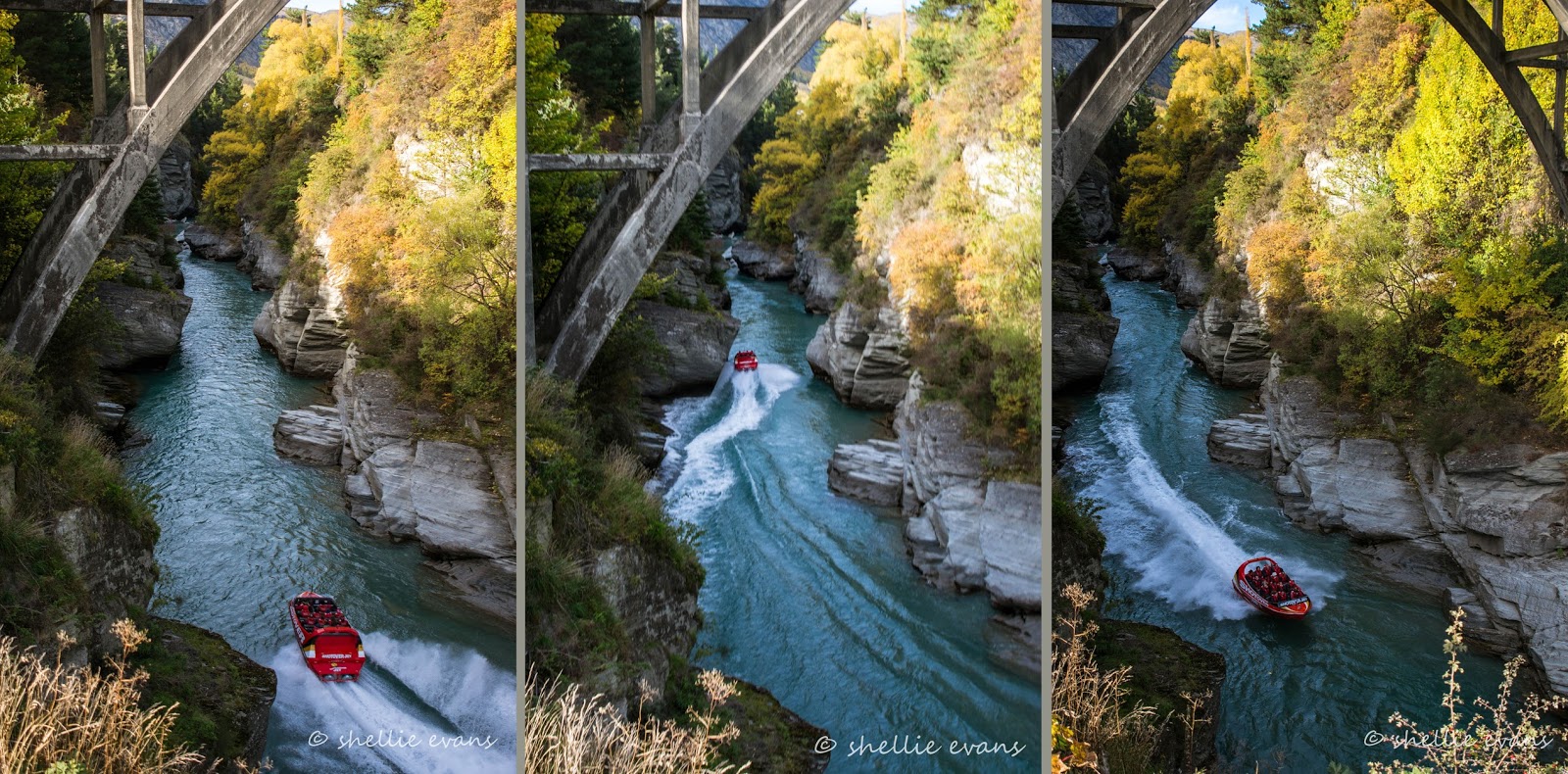
An exhilarating 20 minute jet boat ride with Dion at the helm followed; down the river...

past the river mouth...

...and into the Waitangiroto Nature Reserve which is up a side stream that is part of the river system. It's a quiet and calm oasis surrounded by dense bush and the tall kahikatea trees of an old swamp.

A small unobtrusive jetty comes into view...

And it's here that we disembark and follow a boardwalk through the bush and along the edge of the river, anticipation building as we hear the noisy calls of herons nearby...

...and catch sight of number of large white birds roosting in the bush ahead of us. Our guide Dion puts us straight, those aren't White Herons, they are Royal Spoonbills/Kotuku Nutupapa who also nest alongside the herons. They are still gathering, catching up with each other and checking out who has the best courtship display. They nest a few weeks after the herons.

The boardwalk leads on and then finally into a split level bird hide (complete with binoculars for everyone), which is tucked into the bush across the water from a magnificent sight. Fifty to sixty White Herons in various stages of nesting, feeding and displaying, all located within one tiny section of bush on the outside of a slight bend in the river.
 |
| It pays to have a zoom lens, this is the actual view from the hide |
And that is it, no rhyme nor reason for it to be here in an area that looks much like the bush further upstream and down, the only nesting site in New Zealand of these rare and sacred birds.

The feathers of Kotuku were highly prized by Maori and were used to adorn the heads of chiefs both in life and after death. For Maori, to see one of these birds in a lifetime was considered to be good fortune and to liken someone to a Kotuku was paying them a great compliment.
 |
| A few herons were resting in the trees beside and above the hide, these made ideal close-up subjects |
Along with Maori, European settlers also sought out the White Heron for its ornamental feathers; the feathers becoming fashionable in women's hats. The species was almost exterminated to satisfy the demand after its only breeding site here on the Waitangiroto River was discovered in 1865.
 |
| Younger, less mature birds also gather at the nesting site. They will return each year until sexually mature and ready to breed. |
It’s thought the first White Herons were windblown across
the Tasman Sea from Australia. It’s not known why the White Herons have only
one nesting site or why it’s in the location it is. The population of White Heron in
New Zealand has always been small and limited, when first found, the population reported was between 50 and 60 birds. There are still only around 200 birds in New Zealand, breeding is not always successful and many chicks don't reach fledgling stage.

In 1944 just 4 nests were recorded. This was when steps were taken to protect the herons and the nesting site, and in 1949 the area was
declared a Flora and Fauna Nature Reserve. White Herons only use this area for breeding, usually from mid-September until late February.

The nesting site on the banks of the river is not far from the Okarito Lagoon, where many of the birds feed and forage for food for their chicks. Over the autumn and winter they disperse widely throughout New Zealand and are
generally seen as a single solitary bird.

As the White Herons return to the breeding ground in spring they transform into their
spectacular breeding plumage phase. Long lacy elegant plumes are grown from
their back which they display like peacocks.

The beak changes colour from
yellow to black, and around the eyes a bright turquoise blue colour develops.

Male and female look the same, both have similar plumage. They also don’t mate for life. Elaborate courtship displays include shaking twigs and building a false nest, preening displays and fanning of the nuptial plumes.

Once the female is attracted, she builds the real nest platform which is placed in trees or in the crowns of tree ferns near to or overhanging the water and at various heights from 3 to 13 metres.

The nests are built of sticks and fern fronds, 3-5 eggs are laid and the chicks are ready to fly in December and January.
Not only do Royal Spoonbills nest nearby but also scattered in amongst and in sometimes very close proximity to the heron nests, are the nests of dozens of Little Shags/Kawau Paka...

...their chicks being very demanding (and dare I say it, very ugly).

Mind you, the heron chicks must come a close second!

Many of the nests had newly hatched chicks in them but it was quite hard to see them unless they were demanding food. This was one of the bigger chicks, don't you think he looks like one of those plucked squeaky chicken toys you buy for dogs. At least this ugly duckling will grow into a beautiful bird.

Unlike this poor wee chick who has died in the nest. It was quite sad to watch the parent trying to make the chick sit up. It's early in the breeding season and it's likely this pair will lay another clutch of eggs and try again. In a few weeks time it'll be too late for others who lose their chicks.

We watched this heron in amazement as it flew in with a small eel and tried to feed it to the chick (small for the adult but huge for the chick-remember to click on the photos to enlarge).

The chick tried hard to swallow it down but was struggling, the adult kept pulling it back out and trying again. I know there were some nearby chicks that would have snatched it given half the chance.

It's not known why the shags and spoonbills nest in the same area as the herons although it's thought is might be that they gain some sort of protection, all nesting together and being able to warn of intruders.

Royal Spoonbills have been breeding here since 1949 and prefer to nest in the taller kahikatea trees. I always think of the Spoonbills as the comical cousins of the White Herons. They look prehistoric when they fly and kind of weird with their big spoon bill, especially as they sweep through estuarine waters searching for food and looking like mini minesweepers. And then during the breeding season they have bright yellow patches above the eye that gives the impression it is the eye, and a goofy top knot.
And as if to prove my point, I watched these two hi-jinking about far up in the kahikatea tree above the nesting herons. It was rather strange to see Spoonbills so high up in the trees. I've only ever seen them flying or in estuaries feeding at ground level. It's a pity we missed seeing their nests and chicks, but just another reason to return.

"Get off my back!" says the bird in the middle shot. The bird in the background chooses to ignore the goings-on burying its head in the 'sand'.

"Hey, what happened to your leg!?"
"Huh....I'm sure it was there yesterday"

I could have stayed all day watching the nests and various interactions between the courting birds, the nesting birds and their chicks...
 |
| Bye, bye Shellie... |
Cloud covered Mt Adams looms over the Whataroa valley ahead of us, as we make out way back to the jetty.

As we were the last tour of the day, the boat was loaded onto the trailer and Dion delivered us all back to the office in Whataroa safe and sound.

We both had an awesome time visiting the White Herons and being able to finally tick off one of our bucket-list items. The tour was well worth doing ($135pp Nov'16) and I'd place it as one of the top experiences we've had on this tiki-touring journey of ours. We visited in mid-November but given the chance again, I think I'd add another 2-3 weeks which would have been a little more ideal, with bigger chicks and the Spoonbills nesting. Of course there might not have been as many courtship displays happening.