Showing posts with label rata. Show all posts

Tuesday, February 7

Bushy Park Forest Sanctuary, Kai Iwi, Whanganui

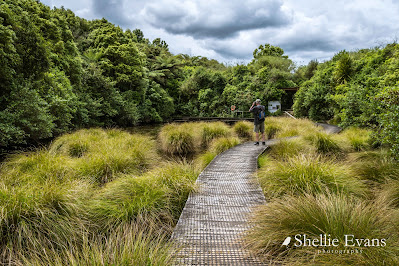
Surrounding the historic Bushy Park homestead is the 89 hectare Bushy Park Tarapuruhi Forest which is a Forest & Bird Project.  


The forest is a rare example of North Island temperate lowland forest. Lowland forests such as Bushy Park historically harboured the largest and most diverse communities of native and endemic plants and animals. 
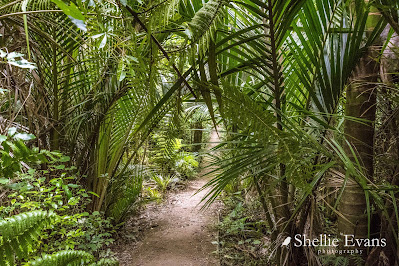

Bushy Park Tarapuruhi is unusual in that it survived (most lowland forest was clear felled) and it is relatively unmodified; there has been no logging or burning of the main forest. It was also fenced to exclude domestic livestock in the mid/early 1900s and is now surrounded by a 4.8km pest & predator fence protecting the forest and birdlife from introduced mammals.
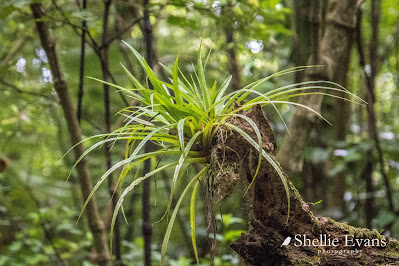
Astelia epiphyte 
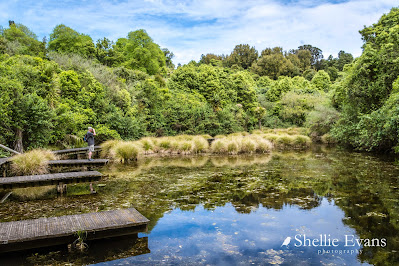
David searching for frogs. They were having their very own concert in the Bushy Parks wetland. But so typical of frogs, they stopped as soon as they spotted us.


I think the little jetties are so school & other education groups can check out the pond for bugs & insects.


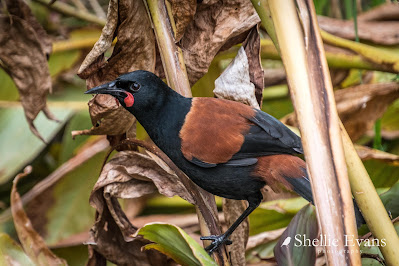
A male Hihi/Stitchbird on high alert. There's a feed station nearby & several males are trying to use it hence this one zipping about chasing them.
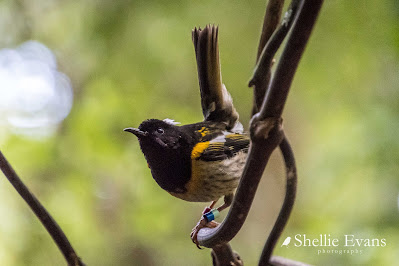
The stitchbird was both rare and poorly known about until the 1990s as few people had an opportunity to visit the single remnant population on Little Barrier Island. With careful management & conservation Hihi can now be seen at several protected sanctuaries.

The female Hihi/Stitchbird is hardly ever seen because the boys take over the feed stations. This one approached but was soon seen off (hence the blurry photo, you have got to be quick to capture them!).

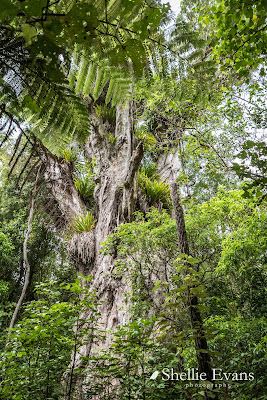
Ratanui the big rata tree of Tarapuruhi/Bushy Park is 36.2mtrs tall. Hard to believe that this rata started out as a small vine that grew up it's host tree and then sent out roots down to the ground, became established & slowly swallowed up its host (often a rimu). And look at all those 'widow makers', large clumps of the epiphyte astelia. Epiphytes growing on a tree that started life as an epiphyte.

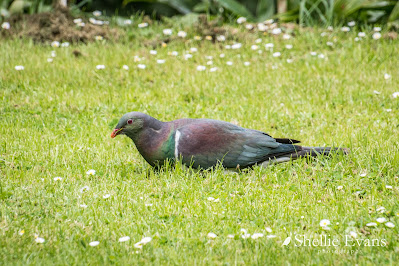
A big plump Kereru/Wood pigeon grazes on the homestead's front lawn. Our native pigeons often graze on the ground in large flocks, I once saw a group of around 50 or so birds in a paddock in Golden Bay. And if they're not grazing they are often being goof-balls, chasing each other, rolling over, doing mock attacks & aerobatics just off the ground.

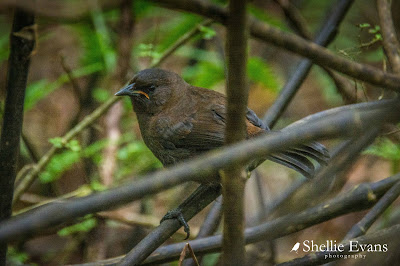
There were so many Tieke/Saddleback in the forest, they were calling to each other, flying about & pulling apart rotting trees on the ground & scratching about in the forest litter but they are very hard to take a photo as it's so dark in the bush & they are so fast in amongst the tangle of undergrowth. So as I was checking out the homestead garden...


... I don't know who got the biggest fright, me or the Tieke when I heard some rustling in the undergrowth & crept up to see what it might be. And look who popped out!

Tieke are endemic (found only in NZ) and classed as 'relic'- a small population stabilised after declining. North Island Saddlebacks (and South Island Saddlebacks) are found only on predator free islands or in protected mainland sanctuaries. Because they are weak fliers & spend a lot of time on and near the ground they are easy prey for predators especially rats & stoats.

Did you know that the South Island Saddleback/Tieke has a different coloured juvenile to the North Island Tieke? South Island juveniles (commonly referred to as ‘jackbirds’) are covered entirely in chocolate brown plumage for their first year whereas North Island juveniles have the adult black plumage with the beginnings of the coloured saddle. 
Tieke/Saddleback Jackbird- Ulva Island, Rakiura/Stewart Island

The homestead's lower carpark is also a POP #4565 (park over property), with a maximum of 3 vehicles a night at $20 for two people ($7 extra person). We visited Bushy Park in the ute but thought it would be great to stay & wake up to a dawn chorus although I think our size rig would be borderline getting up the narrow drive & manoeuvring around in the carpark.  


Sunday, August 16

Wairere Boulders & the Hokianga Harbour

 Catch-up; Northland, Jan 2019 

Another tiki-tour I did while David was taking it easy after his illness was to check out the Wairere Boulders, 50kms west of Kerikeri at the head of the Hokianga Harbour.


Wairere Boulders is a private nature reserve with some amazing rock formations.  


First things first though; a refreshing morning tea from the cute little caravan cafe at the entrance to the Boulder track.


Wairere Boulders also have a lovely camping area for motorhomers, this would be a great place to stay if you're cycling the nearby Twin Coast Cycle Trail. Walk the boulder tracks one day, cycle some of the track the next.


After my cup of tea and cake I headed off up the track which is well signposted with lots of extra information...


...and a few surprises; a Highland cattle bull minus his harem (which were elsewhere on the property). Did you know that a herd of Highland cattle are called a 'fold' after the open, walled shelters that they are kept in over winter in their homeland, Scotland.


The track weaves in and out of trees and through rocky tunnels. There are clear instructions when the going gets a little narrower.


The track heads up the valley alongside a tumbling stream which you can often hear but not see. The scenery is amazing and the rocks are getting bigger. I climb the ramp and follow the track across some very large boulders with similar sized boulders stacked alongside. It looks like a Giant has tossed a handful of marbles down the hillside (click on the photo to enlarge).


Around 2.8 million years ago a volcano, located around the Kerikeri area, erupted. The eruption was so huge that a basalt lava flow spread across a massive area extending to Horeke. In fact there may have been multiple eruptions that extended this far resulting in a deep basalt layer around 30m thick. 
This basalt lava flow started to crack as the ground beneath it was eroded over time by the action of rain. The Wairere Stream formed, widening the gap below the basalt crust, so more and more chunks of basalt broke off. The boulders started to move towards the valley floor.
The underlying soil was clay and as this washed away from under the boulders they moved further down the valley, finally ending up at the valley floor in the river. It has taken the boulders 2.8 million years to get from the top of the hill to the positions they lie in today.
There are also some quirky characters (Boulder Beasts) along the way...


The fluting on many of the rocks is also unique for this type of rock.
Fluting is the name given to the type of erosions on the boulders. Fluting is sometimes also known as lapiez or solution pits and is caused by water running across the rock surface. It is most commonly seen on limestone, and it is very rare for basalt to erode this way. Basalt requires acidic water to cause fluting, and only at Wairere Boulders, due to special set of circumstances, did the water become acidic enough for the fluting to occur.

The track crosses the Wairere Stream and heads back down the other side. Firstly though, I take a side track through a rock tunnel and a lovely Nikau forest....


...down to a swimming hole.


The tannin stained swimming hole water is dark and brooding. There's no way I'd be going in there even if I had my togs with me, I'm quite positive that water hides a several humongous eels. The pool reflections are amazing though and the surrounding bush, still & peaceful.


Back at the junction, I continue on down the stream stopping to check gaps in the bush and rock hop out over the water into the open every now and then.


Even though it's often up hill and down dale, the track is pretty easy going and there are plenty of interesting features along the way to check out, including this giant rata tree on the right. Rata trees actually start life as an epiphyte vine which grows up and entwines a host tree. The host tree is eventually smothered and dies leaving the rata vine (now a tree) standing tall and strong. 


This boulder look like a large Christmas puddings with its fluted top and sides.


The track crosses several of the boulders leaving a well worn path through the moss and lichen.


I come to another junction, this time a side track heads straight up the side of the hill to a lookout. It's an hour return and I'm a little reluctant to head up there as I have other places to visit today. I walk a few dozens metres and when the track breaks out into a paddock and gets very slippery I decide that'll be it for this visit, I turn around and head back down.


Towards the end of the track there's a gap in the bush and I can see across to the otherside of the stream and the large boulders I crossed on the way up. A lady in blue carrying a sunhat comes into view as she crosses over the top of them giving me a perfect shot to show you perspective. I'd highly recommend a visit to the boulders, it was an enjoyable walk with lots of interesting features.


From the Boulders I drove down to the Hokianga Harbour and along to Horeke finding this very cute little Maori Church up a side road. Some of you will have seen this, the cycle trail passes by on the road outside.

Then it's back to the Horeke Hotel to check out the two jetties that reach out into the shallow waters of the upper Hokianga Harbour. The hotel hosts many cyclists for meals & accommodation. The Twin Coast Cycle Trail has helped revive and sustain many of these small rural settlements in Northland.


And then it's onto Mangungu Mission (established in 1828), just along the harbour from the hotel and where in February 1840, the third and largest signing of the Treaty of Waitangi took place.

Mangungu Mission House

Thousands of Maori, in hundreds of waka, gathered in the harbour below for the historical event.


I walked out to the end of the jetty below the mission too. In this quite backwater of the Hokianga, it's hard to imagine the hustle & bustle of those times long ago.  


It was time to head back to Kerikeri via SH12 to complete the circle. At Taheke, I also added another two churches to my collection, both have seen better days.