Showing posts with label house. Show all posts

July 28, 2020

A Historic Tiki Tour of Waimate North

Catch-up; Northland Jan 2019 

While David recuperated from his bout of shingles I took myself off on several tiki-tours around Northland, the first one on a several squiggly loops to check out a number of churches and historic places in the wider Waimate North area. Northland has a multitude of small & historic churches and I was keen to add a few more to my church photo collection.


My first stop was on SH1 just south of Ohaeawai, at the historic Pakaraka Anglican Church of the Holy Trinity and probably one of the most visited & photographed churches in Northland due to it's location on the main highway. 


The church is Gothic Revival in style and the slim steeple is a replica of the original tower which blew down in a storm in 1946. The new steeple was erected in 2001, 55 years later. The Reverend Henry Williams, one of the first Anglican missionaries stationed in the Bay of Islands and later Archdeacon of Waimate, is buried in the cemetery.


The next church is located on a back street, not far along the road at Ohaeawai, which is a small settlement at the junction of SH1 & SH12. I believe this is an Anglican church but I could find no other reference to it and it's obviously taken a back seat to several other more historic & prominent churches in the area. Like many of the churches around New Zealand, this one is sadly heading to a state of disrepair...


...unlike the nearby Ohaeawai Hotel (locally know as The Crossroads) which looks to have recently had a fresh lick of paint. I bet this grand old lady could tell a few stories if only the walls could talk. 


My next stop is at Te Waimate Mission where the remains of a model English village, built by missionaries is located. The Mission House, built in 1832, is the only survivor of three mission houses built in 1830 on behalf of the Church Missionary Society by the Reverend Samuel Marsden (click photo to enlarge)


The Mission House is also New Zealand's second oldest building. I felt a bit mean about not going inside to check it out; I was in a bit of a hurry. And especially as I was the only visitor in the grounds and the volunteer guide came outside to greet me. I had to tell him I was on a mission (no pun intended!) 


Te Waimate was New Zealand's first farm and had a very famous visitor; scientist & evolutionist Charles Darwin stayed here for the Christmas of 1835.


Nearby and part of the mission station is St John the Baptist Church which was originally built in 1839 and then rebuilt in 1870 using materials from the first church. the new church was much smaller due to the drop in congregation numbers. 


Located between the Mission House & the church is the Sunday School building, built in 1880


Not far down the road, and part of the original mission settlement are the remains of Bedggood Cottage & the Blacksmiths Shop.


The Blacksmiths shop collapsed in 1979 and was reconstructed in 1986 using the original building's materials.


From the mission I next headed to the historic St Michael's Anglican Church at Ngawha.


St Michaels Church was built in 1871 and is located on the site of Pene Taui's Pa, which is where Te Ruki Kawiti successfully defended the Pa against British forces in what is known as the Battle of Ohaeawai. It was built by local Maori as a symbol of peace and a tribute to Pakeha who had died in the battle.
On 1 July, 1845, almost 600 troops and 300 warriors of Tāmati Wāka Nene besieged about 100 men at a pā at Ōhaeawai led by Lieutenant Colonel Despard. Te Ruki Kawiti held off the attack on the highly intricate and fortified pā of Ngāti Rangi chief Pene Taui. The fortifications were ground-breaking in every way, and became one of the prototypes for gunfighter warfare in later engagements. 
The pā had two palisades - including a strong inner fence made of puriri logs set almost two metres into the ground with five metres of log standing above ground. The solid palisades of the inner fence had withstood the artillery attack and remained intact, preventing the British from entering the pā. Meanwhile, the firing trenches proved devastatingly effective against the attackers. "Within seven minutes of the attack beginning, over 47 of the attackers lay dead with about 70 more injured. The attack was an unmitigated disaster."
By 8 July, the pā was found to have been abandoned and the defenders had disappeared into the night. Lieutenant Colonel Despard suffered a defeat. (extract from RNZ)

From St Michaels I headed down the highway towards Kaikohe, stopping to check out the Kaikohe Showgrounds & Equestrian Centre which is a NZMCA CAP (costs apply parking). It's where I thought we'd stop for our first night once David was ready to move and we'd left our friends in Kerikeri. It's a great site, well maintained and with lots of space. There's even a couple of  sites with power.


The Showgrounds are on the corner of the road that leads to Ngawha Hot Springs so I drove off to take a look; I do love it when I'm on my own and I can pick & choose what to visit & where to stop. Poor David does get dragged down a few too many roads, it's nice not to feel guilty about it today. 

Ngawha Pools- there are 16 of them- are fed by a natural geothermal spring and come in a range of temperatures including the 50 degree Bulldog pool which was closed (for obvious reasons!).
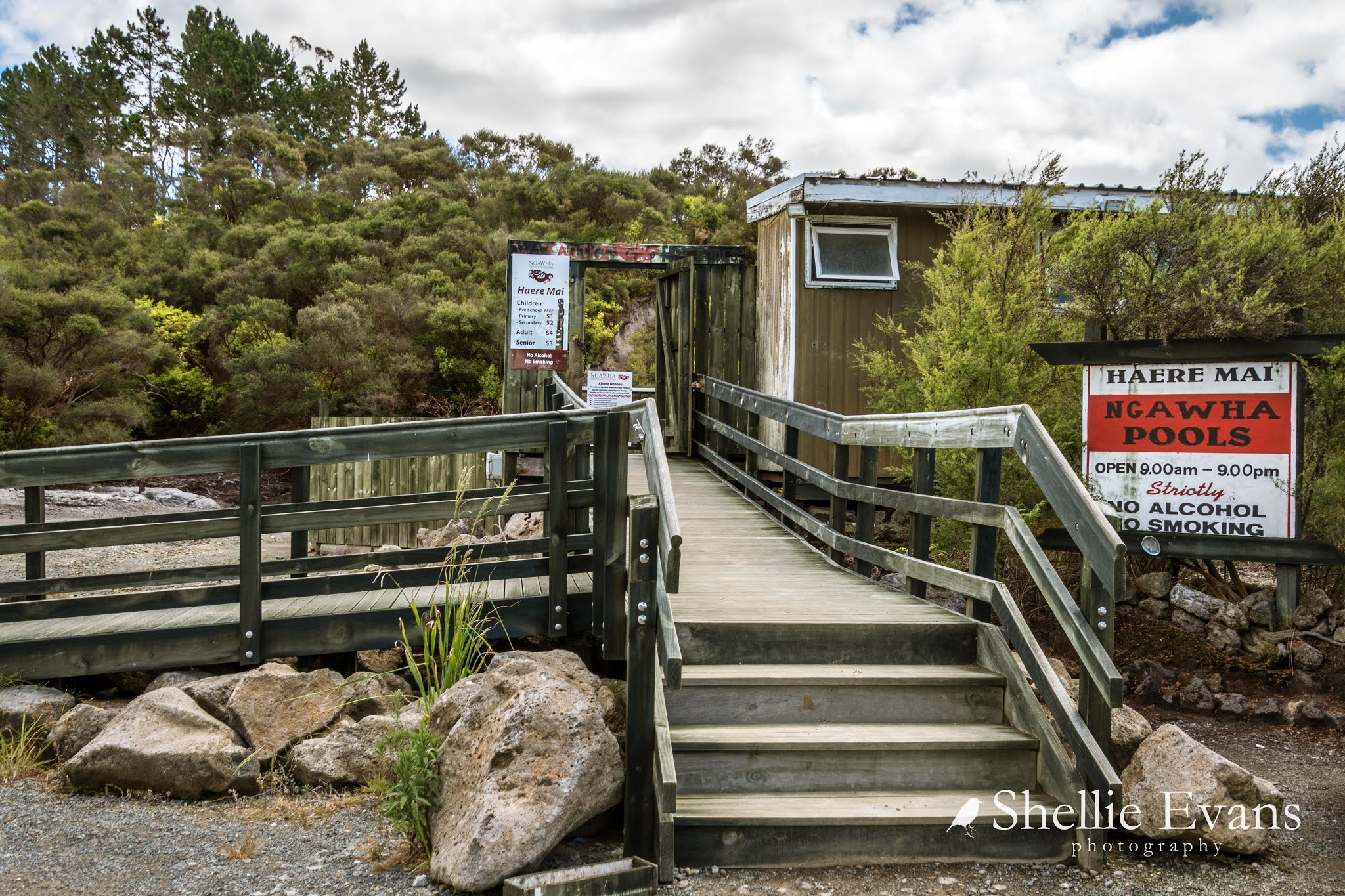

The Ngawha Pools will never look like this again, they are going through a major redevelopment and enhancement programme at the moment and have been closed from March 2020 until December 2020. Obviously the redevelopment was needed, the pools are very popular amongst both local & overseas tourists but it's a shame the unique character of the pools will be lost to flashy frontages and further health & safety features.


From Ngawha I drove into Kaikohe and up to the top of Monument Hill where there are great views out out over the surrounding farmland and from where I spotted the second to last church on my visit list today.


Monument Hill is named after the memorial that celebrates Hone Heke Ngapua who was the grandnephew of the war leader Hone Heke. Hone Heke(the warrior) retired & died in Kaikohe in 1850. 


Hone Heke Ngapua (grandnephew) was a member of parliament & active supporter of the Maori parliamentary movement known as Kotahitanga (click on the photo to read)


Hone Heke Ngapua Memorial

I drove down and along the highway to the Aperahama (Anglican) Church which was opened in 1885, the church I'd seen from Monument Hill. The church belongs to the Ngati Tautahi hapu (hapu= a division of a Maori tribe) & is essentially a Maori church although European families belonged to the congregation for many years. 


The church was restored & repainted in 1964 and is not only significant because of it's age but also because of its association with the development of the Maori Anglican faith.


The last stop for the day was at St Catherines Anglican Church near Okaihau.


Information panels across the road from the church tell about the first battle in 1845 of the Northern Wars and the memorial in the cemetery to the 12 fallen British soldiers. The Twin Coast Cycle Trail passes the church which is just as well as these information panels often provide a lot more information than what can be found on the 'net, especially history on the lesser known churches and historic places.


I know I missed a few other churches on my road trip, and in particular the Catholic church just up the road from this St Catherines. I had marked down as many as I could but it was quite hard locating them once I was on the road. Especially when much of the area was out of range to Mr Google when I went to check!  

I told myself that I had to leave some for our next visit to the north. From Okaihau, I took the most direct route back to Kerikeri. And didn't spare the horses, it had been a long day.


June 13, 2020

Stepping Back in Time- Oamaru

Catch-up
I've managed to come up for some air with a little free time to write a blog after spending the last few weeks buried in boxes, bags, bubble wrap & way too much gear that I was sure I thoroughly sorted out eight years ago! It is amazing how your priorities change after living full-time on the road, where life is much simpler and where you only have so much space to keep 'stuff'. It was a little over-whelming as I unpacked box after box, reacquainting myself with furniture & furnishings, trinkets & treasures from another life. Now to sort it all again; you wouldn't think I'd already halved the haul twice way back then.

And now to catching up on the blog. Again. November 2019 (seems a lifetime ago)

We were still staying at Glenavys Waitaki River Motor Camp and after ticking Riverstone Castle off our 'must visit' list we took some time out to visit Oamaru, 20kms south of Glenavy and check out several historic buildings that had been on my radar to visit but had always been closed when we passed by. 


The first was Totara Estate, a historic farm that had a significant role in making New Zealand what it is today. As an added bonus the volunteers on duty in the shop were in period costume (the reason will become obvious further down the page). 

Before I could explore the grounds I was directed to a small room at the end of the entrance building to watch a 10 minute introduction video on Totara Estate. I was itching to get out there and explore but I dutifully sat and saw it through to the end. If there had of been more people, I would have sneaked out before the volunteers spotted me. 


Farming began at Totara (south of Oamaru) in the 1850s. By the time the estate was purchased by the New Zealand & Australian Land Company in 1866 it covered almost 15,000 acres and farmed over 17,500 sheep, 200 cattle, and was purported to have the best wheat, potato and mangold (fodder beet) growing land in the country.


A downturn in wool prices combined with a nationwide over-supply of sheep meat saw the general manager of the Land Company, William Davidson, follow an ambition to be the first in New Zealand to use new steam-powered freezing technology to send meat to the other side of the world. 


And so it was, then, that the first ever shipment of frozen mutton made a three-month journey from New Zealand to England in 1882, launching an industry that brought success to Totara Estate and well beyond. By the end of the 1890s, New Zealand’s frozen meat industry was a powerful force – economically, politically and socially – and still earns billions in foreign earnings each year. 

I had a grim fascination with the description of the piggery beside the killing shed (having been brought up on a pig farm). Click the photo to read the gory details.


Our next stop was just down the road at the historic Clarks Flour Mill, built in 1866 and originally part of Totara Estate. Clarks Mill was one of 13 flour mills in North Otago District and the last one running, outliving all the others by 50 years by the time it ceased operation in 1976.

Since it's closure, the machinery inside, including a rare collection of roller milling machinery installed in 1893, has been fully restored to operating condition by a team of volunteers. The mill grinds into action on the last Sunday of each month, offering visitors the opportunity to see, hear and feel what it would have been like to work in the mill.


The imposing four-storey mill building was constructed in local limestone and is of a Scottish design.  Other highlights include the original water race, and the railway line built in 1877 to connect the mill to the main trunk line.  


The miller's house and a cottage are both also constructed from local stone. The small cottage is known as Smokey Joe’s and remains largely unaltered since it was built in 1860s. During the prohibition years the Clark family turned the cottage into a private hall for the locals to gather for a beer or two. 


Our next stop is back in Oamaru town at this lovely little cottage tucked away in a quiet back street. I wonder if you can guess who once lived here? (Before you scroll down the page). 


This modest house was once the home of internationally renowned New Zealand author, Janet Frame. Janet lived here with her parents from 1931 to 1943 (age 7 to 19).


I arrived during the afternoon opening hours which was more by luck than judgement. I paid the small entrance fee and stepped back in time wandering through the various rooms furnished with authentic furniture and objects from the time the Frames lived in the house. There are also several items referenced to Janet's work including her old typewriter.


It was a lovely surprise to hear the house fill with music which I traced it back to the lounge where the afternoon's volunteer was happily playing the piano.


Thanks to the period dressed volunteers at Totara Estate we were made aware of the annual Victorian Fete taking place in town at Oamaru's Victorian Precinct.  We missed the Grand Parade, but thoroughly enjoyed walking a couple of laps of the Precinct roads.


After several days of  Victorian Heritage Celebrations, the fete is an eagerly anticipated event with many people getting right into the spirit.....


......dressing up in Victorian costume, playing games and entering competitions and selling all manner of Victorian antiques, knick-knacks and clothing from the shops housed in the historic buildings & from the decorated stalls lining the Precinct streets.


I'll let the photos do the talking while I do the walking (I wonder what that guy behind is thinking?)....


I saw this group of children several times during the afternoon, on the last occasion the bonnet on the baby in the cart had slipped right over her face as she was being trundled down the cobbles at a fast rate of knots by one of the older children. I was worried she was going to topple out but she was holding on to the sides very tightly even though she couldn't see where she was going.


This crowd of people were being entertained by...


...a very colourful lady, who was judging 'The Victorian Beard & Moustache Competition'.


There were some amazing costumes although I'm sure a few people suffered under their heavy layers in the early summer sunshine.


Several unique antique vehicles were on display (and a lady on stilts). I was sure the three wheel vehicle was going to tip over. There was a fake cow with a rubber udder where you could try your hand at milking. And amongst the food stalls, a Southern classic- cheese rolls- were being sold from a pop-top VW Kombi.


Entertainers and stall holders included a puppeteer with Mr Bones...


...Morris Dancers, a shoe shine boy (who also wanted payment if you took a photo), a facepainter & balloon modeler, period costume family photos, Christchurch's Wizard (how did he get in on the act?) and a burlesque show.


Oamaru's more famous Steampunk genre was taking a backseat during the Victorian festivities although I did see several people dressed in a combination of both.


Steam Locomotive B10 operated by Oamaru Steam & Rail was running short trips from Harbourside Station around the harbour to the Blue Penguin Colony attraction and back again. 


I waited several times to catch it as it passed, finally deciding that you'd hardly notice that it is actually going in reverse here!


So all in all, we made up for lost time and managed to cram quite a bit of historic Oamaru into just one day.


If you notice a slight change in the layout of the blog (not a major one I hope), it's because Blogger have done an upgrade to the programme and this is the new format which is also meant to be mobile friendly. Please let me if there's anything unusual.