Our next stop after Lake Kaniere was at the Shining Star Beachfront Accommodation at the northern end of Hokitika, this was so I could do a whole heap of laundry (there was no way I was going back to THAT laundromat) and dry things out after all the rain we had had at the lake. Shining Star is a combined campground with cabins and motel units set in spacious grounds with a small animal park and access to the beach. The sites were rather small but we managed to squeeze into one at the end of a row. It was a busy place, not only were all cabins & motels full every night, most of the powered sites were taken too- a lot of hire vans just in for the night.

Right outside our door was a flowering bottlebrush which a Bellbird/Korimako visited frequently- he was a little hesitant at feeding on the van side of the bush but I managed to grab a couple of good shots of him before he departed. I'm sure he is in his 'happy place' in the first shot.

Across the main road from the campground, up a short gravel track and tucked into a damp dark cliff face is the Glow-worm Dell, a free and popular attraction that has been there for many years. During the day it’s a dark alcove with a beaten up fence, moss and creeper covered walls & a small waterfall. But come night fall, the surrounding walls came alive with thousands of tiny lights from the glow-worms; it looked like a sparkly Milky-Way (yes, really. Look hard). I failed in my attempt to shoot the glow-worm lights, just a few faint sparkles.
Unfortunately I left it too late, it was far too dark and there were too many people arriving to try for a longer exposure. In such a small place I was worried my tripod was going to get bumped and people were waving their torches all over the show which turned the glow-worm lights off. I thought I might try again the next evening but guess what? It rained! And the next night too. So I’ll have to wait until the next ‘Dell’ we come across to try again.

We stayed at Shining Star until the rain stopped and then re-located to the south end of town, to the NZMCA Hokitika South Bank Park which is located funnily enough on the south bank of the very wide Hokitika River. Out in the countryside but still very handy to town. This was also a new record for moving sites, just 2kms down the road!

It’s just a long walk across the bridge and you’re in town. That’s the Park on the right at the end of the bridge. The ‘kiwi’ was located in a shingle pile beside the gate- someone with a sense of humour and a little vision- I thought it was a shoe cleaning brush from a distance! The old cow shed is in the paddock behind the Park and makes a lovely silhouette as the sun sets.

I had some family business to do in Hokitika; my father’s maternal aunty and her husband lived in Hokitika all their adult lives (before they passed on) and I wanted to visit Dad’s first cousin who still lives nearby in Ruatapu. I remember from my childhood Dad telling us about his auntie's house at the end of the Hokitika road-rail bridge and watching a 1960's home movie of cars waiting for a train to pass through. The old Hokitika Bridge was replaced in 1991 by this bridge- it followed the same course- and after talking to Roger (Dad’s cousin), the NZMCA Park is just up the road from where the house was located- the house was destroyed in a fire a number of years ago.
Roger told us of a trick he and his mate used to play at night. They would cycle into town over the bridge- I think he said it was nearly a mile long- they would cycle beside each other with their lights on and the people in the cars at the other end, who had to give way on the one way bridge, would think it was a car crossing and they’d wonder why it was taking so long until the boys got within sight when a lot of cursing and fist waving went on.
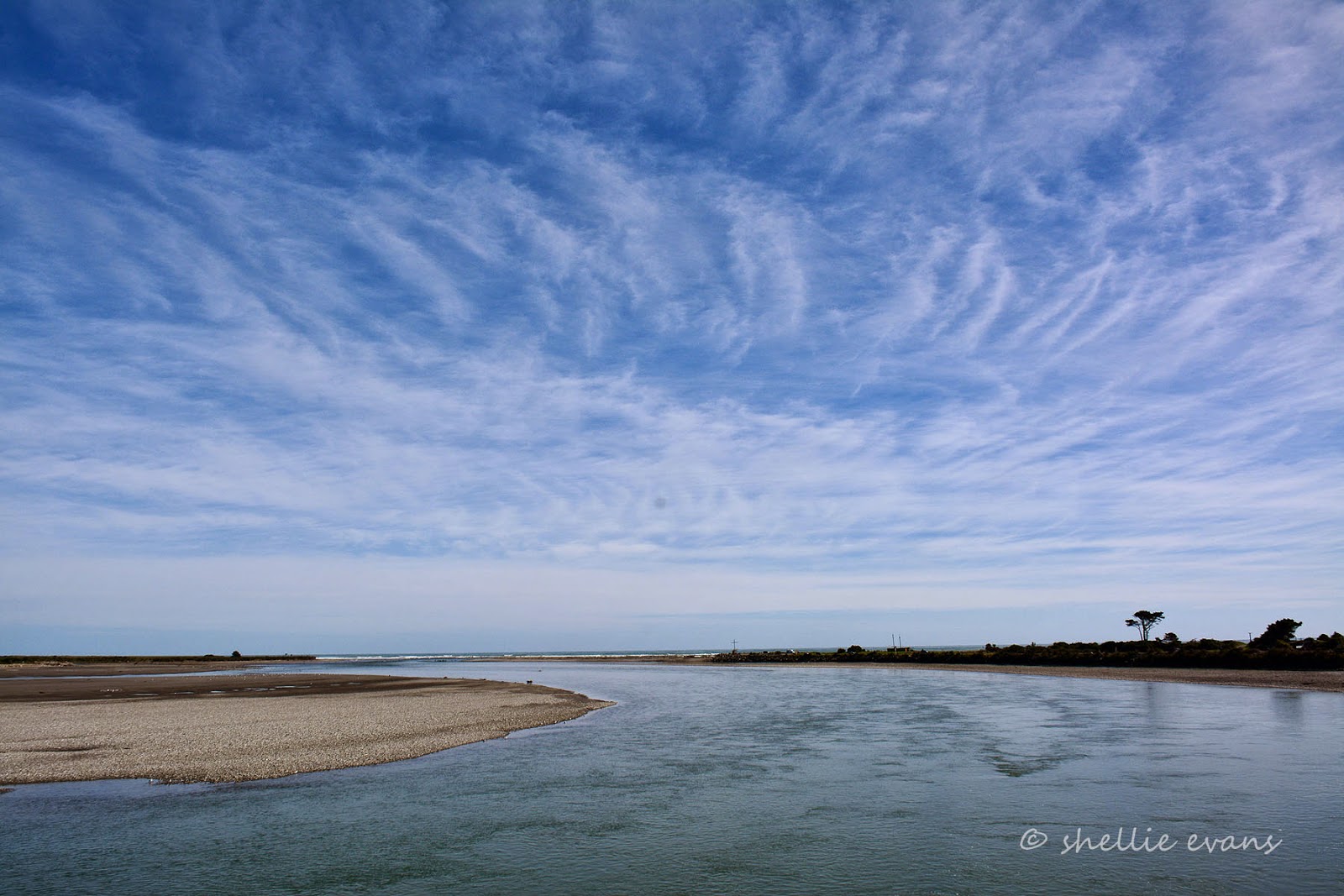
It certainly is a long bridge, with expansive views of the river down to the mouth and across to Sunset Point. I walked into town to take some photos of the beach and historic buildings.
The iconic HOKITIKA driftwood sign appears at the end of the walkway, from the main street to the beach. It appears on all the promotional material for Hokitika and usually with the brilliant colours of a stunning sunset behind it. I’ll have to see if I can replicate it later in the week.

On the beach in front of the sign are the remnants of the annual driftwood sculpture competition which was held about 6 weeks ago. Only the sturdier works-of-art have survived the battering of a west coast beach. A memorial concrete ‘comfy’ chair sits nearby- visiting tourists use it as a prop as they take photos of the sign and beach.
The ‘Before I Die’ bucket list is a worldwide art initiative that encourages people to contribute the things they want to achieve before they depart this world. I like the wag who contributed the second to last entry on the board- Before I die I want to....buy a rain poncho- they were obviously here the same time as us! One of the other entries said they wanted to buy waterproof shoes.

I did come back for sunset but missed the best night of all when the sky was a blaze of fiery reds and golds- I’ll save them for another post. And I even missed the boat on this shot, arriving seconds after the golden ball disappeared below the horizon. The trick is to catch it in the centre of the 'o'.

The Whitebaiter’s Walk is located on a grass reserve at the entrance to the town, it's a visual history of whitebait.

There are 26 large boards with whitebait facts, figures, sayings and photos of the tiny little delicacy known as ‘white gold’.

I expected there to be a big whitebait mounted on a stone pile; a bit like the big salmon or big carrot in other towns. After all, Hokitika is the home of the whitebait but then again it’s the home of jade (greenstone or ponamu), home of the Wildfood Festival & home of the Driftwood Sculpture so it would probably get a little crowded with all those vying for attention at the entrance to the town. The best way to celebrate whitebait is to walk across the road from the Walk and buy yourself a whitebait fritter from the fish ‘n chip shop.
The right hand photo on the second row shows registered whitebait stands on Mokihinui River, not necessarily current). That's a very short stretch of river, the road on the right bank is the one we traveled down when we stayed at the Gentle Annie campground on our way to the top of the West Coast. This was just one of the rivers shown on the board, others were just as crowded.

I've posted this board separate so you can read the impressive size of the catch back in 1944. It's a wonder there are any whitebait left (click to enlarge).


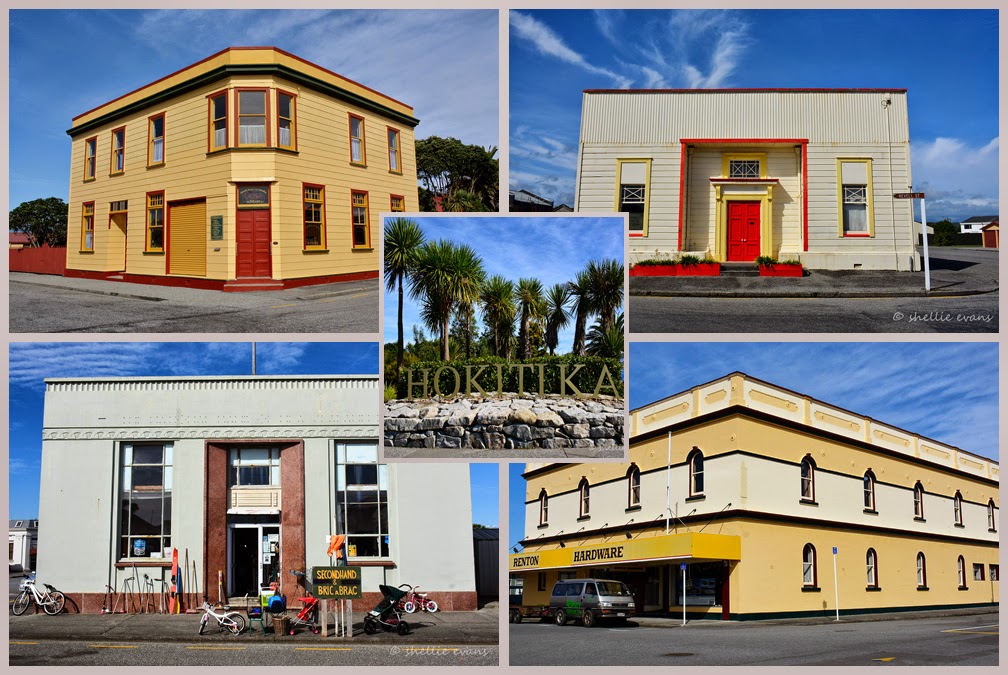
Some of Hokitika’s historic buildings- three former banks and a movie theatre.
From left to right- the art deco Regent Theatre, former Government & Courthouse Building with a statue of Sir Richard Seddon (NZ Prime Minister 1893-1906), former Custom House on the banks of the Hokitika River, the museum is housed in the historic Carnegie Library Building, opened in 1908 and funded by US steel magnate Andrew Carnegie. And the precious little Revell Street Cottage.


And once again I say, this will likely be the last post for a few days. We're moving on into Arthurs Pass later today.....if the rain stops!