Showing posts with label tower. Show all posts

September 08, 2017

Port Hills- Dyers Pass and Gebbies Pass

Catch-up 

Before we left Christchurch I managed to do a quick tour over the Port Hills through Dyers Pass to Governors Bay and then back to Weddons via Gebbies Pass, roads we hadn't explored on any of our previous visits to the city. I was waiting for a fine day, but in the end I had to do it on another not-so-great day similar to the one I had when I explored Godley Head at the other end of the hills.

First stop was at the very busy Sign of the Kiwi cafe, an iconic Christchurch landmark; built in 1916-17 as a staging post and opening as a tearoom and rest house. The cafe was closed after the 2011 earthquake and didn't open again until January this year. Just a month later it came very close to being destroyed in the massive Port Hills fire.


I drove along the Summit Road and up to the top of Sugarloaf where another iconic Christchurch symbol is located; the radio & television communications tower.


From there the views are expansive out over the city, across the Canterbury Plains to the Southern Alps behind. In the foreground the regenerating hillside is slowly recovering after the devastating February fires raged out of control and burnt over 1650 hectares of the Port Hills. The Sign of the Kiwi is located just out of sight to the left, where the two sections of the Summit Road meet (click to enlarge).


Parts of the badly damaged Adventure Park including the chairlift can been seen across the valley.


The dead pine trees are slowly being removed.


The fires were ferocious and burned on both sides of Dyers Pass Road and also jumped the Summit road below and burnt up to where I'm standing.


Here's a photo taken during the fire from below, Sugarloaf and the communication tower can be seen at the back, on the left.


I carried on a short way past Sugarloaf until Governors Bay came into view down the inside of the Port Hills rim. I'm heading to the other side of that first finger of land and crossing over Gebbies Pass at the lowest point of the hills behind.


I then returned to Dyers Pass and drove down to Governors Bay, stopping to take a photo of the Governors Bay Jetty (see it in the photo above?) which looks a similar length to the well known Tolaga Bay wharf, north of Gisborne. It was closed and in need of repair; a noticeable section in the middle sagging into the tide.


Next stop was the historic St Cuthbert's Church which was built in 1860. 


It was extensively damaged in the September 2010 earthquake and had only just reopened after a major rebuild.


With the temperature dropping and the day not getting any brighter it was just a few quick stops at places of interest as I wound my way along the very tight and winding roads that follow along the edge of Governors Bay...


...until I reached the old Blacksmith building on the corner of Gebbies Pass Road where I turned inland... 


...and found two more churches to add to my collection- St Peters Anglican Church at Teddington...


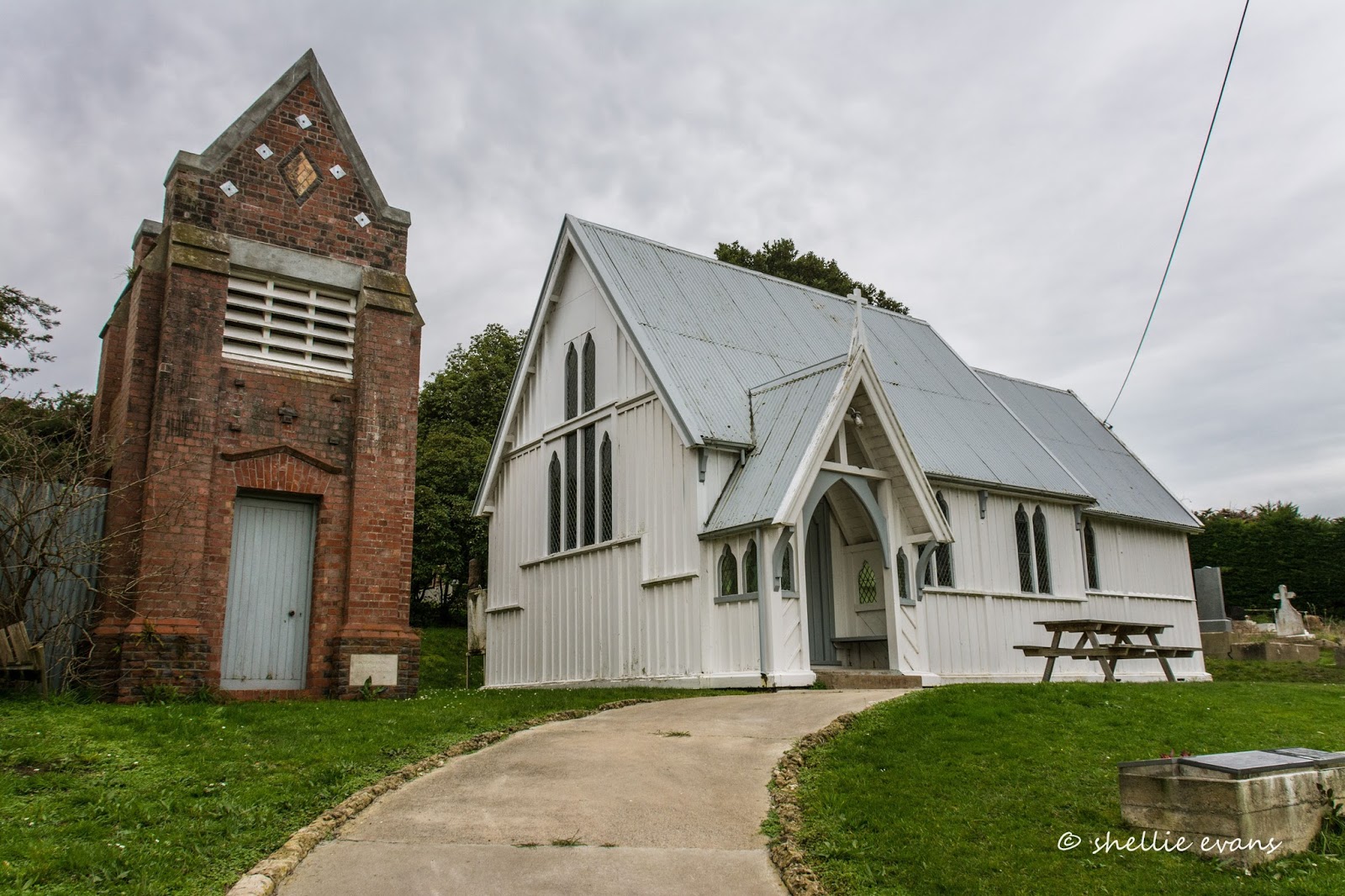
...and the Anglican Church of the Epiphany in Gebbies Valley, which must have one of the most elaborate belfries in all of New Zealand's country churches.


And then it was home to Weedons, to pack and prepare to move on out.


April 27, 2015

A Cool Little Town- Hokitika

I stole the slogan for Hokitika because, well, it is a cool little town! We both have taken a liking to Hokitika, it a lovely place with plenty to see and do in town and the surrounding area.

Our next stop after Lake Kaniere was at the Shining Star Beachfront Accommodation at the northern end of Hokitika, this was so I could do a whole heap of laundry (there was no way I was going back to THAT laundromat) and dry things out after all the rain we had had at the lake. Shining Star is a combined campground with cabins and motel units set in spacious grounds with a small animal park and access to the beach. The sites were rather small but we managed to squeeze into one at the end of a row. It was a busy place, not only were all cabins & motels full every night, most of the powered sites were taken too- a lot of hire vans just in for the night.


Right outside our door was a flowering bottlebrush which a Bellbird/Korimako visited frequently- he was a little hesitant at feeding on the van side of the bush but I managed to grab a couple of good shots of him before he departed. I'm sure he is in his 'happy place' in the first shot.


Across the main road from the campground, up a short gravel track and tucked into a damp dark cliff face is the Glow-worm Dell, a free and popular attraction that has been there for many years. During the day it’s a dark alcove with a beaten up fence, moss and creeper covered walls & a small waterfall. But come night fall, the surrounding walls came alive with thousands of tiny lights from the glow-worms; it looked like a sparkly Milky-Way (yes, really. Look hard). I failed in my attempt to shoot the glow-worm lights, just a few faint sparkles.

Unfortunately I left it too late, it was far too dark and there were too many people arriving to try for a longer exposure. In such a small place I was worried my tripod was going to get bumped and people were waving their torches all over the show which turned the glow-worm lights off. I thought I might try again the next evening but guess what? It rained! And the next night too. So I’ll have to wait until the next ‘Dell’ we come across to try again.


We stayed at Shining Star until the rain stopped and then re-located to the south end of town, to the NZMCA Hokitika South Bank Park which is located funnily enough on the south bank of the very wide Hokitika River. Out in the countryside but still very handy to town. This was also a new record for moving sites, just 2kms down the road!


It’s just a long walk across the bridge and you’re in town. That’s the Park on the right at the end of the bridge. The ‘kiwi’ was located in a shingle pile beside the gate- someone with a sense of humour and a little vision- I thought it was a shoe cleaning brush from a distance! The old cow shed is in the paddock behind the Park and makes a lovely silhouette as the sun sets.


I had some family business to do in Hokitika; my father’s maternal aunty and her husband lived in Hokitika all their adult lives (before they passed on) and I wanted to visit Dad’s first cousin who still lives nearby in Ruatapu. I remember from my childhood Dad telling us about his auntie's house at the end of the Hokitika road-rail bridge and watching a 1960's home movie of cars waiting for a train to pass through. The old Hokitika Bridge was replaced in 1991 by this bridge- it followed the same course- and after talking to Roger (Dad’s cousin), the NZMCA Park is just up the road from where the house was located- the house was destroyed in a fire a number of years ago.

Roger told us of a trick he and his mate used to play at night. They would cycle into town over the bridge- I think he said it was nearly a mile long- they would cycle beside each other with their lights on and the people in the cars at the other end, who had to give way on the one way bridge, would think it was a car crossing and they’d wonder why it was taking so long until the boys got within sight when a lot of cursing and fist waving went on.

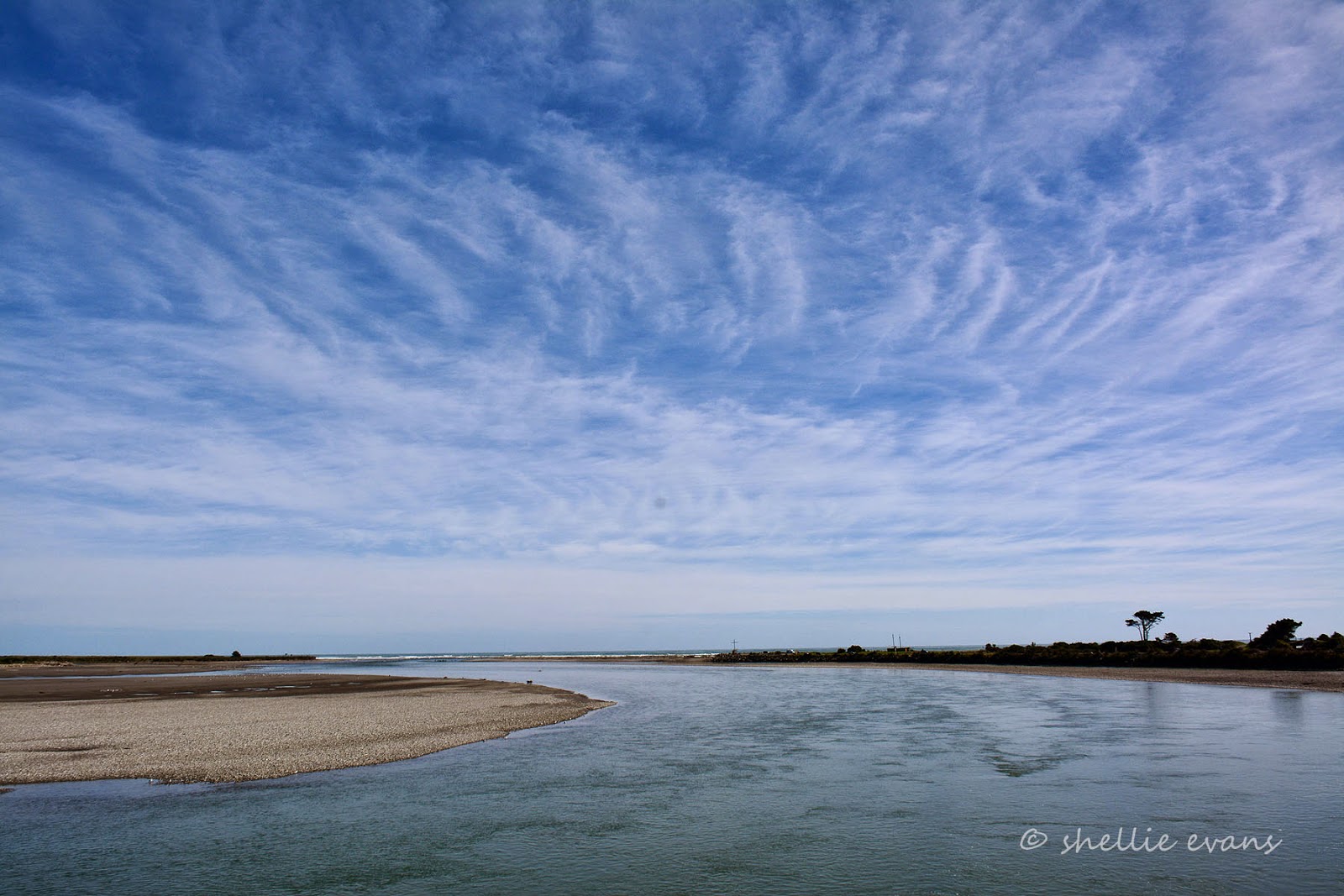
It certainly is a long bridge, with expansive views of the river down to the mouth and across to Sunset Point. I walked into town to take some photos of the beach and historic buildings.


The iconic HOKITIKA driftwood sign appears at the end of the walkway, from the main street to the beach. It appears on all the promotional material for Hokitika and usually with the brilliant colours of a stunning sunset behind it. I’ll have to see if I can replicate it later in the week.


On the beach in front of the sign are the remnants of the annual driftwood sculpture competition which was held about 6 weeks ago. Only the sturdier works-of-art have survived the battering of a west coast beach. A memorial concrete ‘comfy’ chair sits nearby- visiting tourists use it as a prop as they take photos of the sign and beach.

The ‘Before I Die’ bucket list is a worldwide art initiative that encourages people to contribute the things they want to achieve before they depart this world. I like the wag who contributed the second to last entry on the board- Before I die I want to....buy a rain poncho-  they were obviously here the same time as us! One of the other entries said they wanted to buy waterproof shoes.


I did come back for sunset but missed the best night of all when the sky was a blaze of fiery reds and golds- I’ll save them for another post. And I even missed the boat on this shot, arriving seconds after the golden ball disappeared below the horizon. The trick is to catch it in the centre of the 'o'.


The Whitebaiter’s Walk is located on a grass reserve at the entrance to the town, it's a visual history of whitebait.


There are 26 large boards with whitebait facts, figures, sayings and photos of the tiny little delicacy known as ‘white gold’.


I expected there to be a big whitebait mounted on a stone pile; a bit like the big salmon or big carrot in other towns. After all, Hokitika is the home of the whitebait but then again it’s the home of jade (greenstone or ponamu), home of the Wildfood Festival & home of the Driftwood Sculpture so it would probably get a little crowded with all those vying for attention at the entrance to the town. The best way to celebrate whitebait is to walk across the road from the Walk and buy yourself a whitebait fritter from the fish ‘n chip shop.

The right hand photo on the second row shows registered whitebait stands on Mokihinui River, not necessarily current). That's a very short stretch of river, the road on the right bank is the one we traveled down when we stayed at the Gentle Annie campground on our way to the top of the West Coast. This was just one of the rivers shown on the board, others were just as crowded.


I've posted this board separate so you can read the impressive size of the catch back in 1944. It's a wonder there are any whitebait left (click to enlarge).


Hokitika’s Memorial Clock Tower takes centre stage in the town. The clock tower also serves as the South African War Memorial and was unveiled in 1903. Hokitika celebrated its 150th birthday back in December.


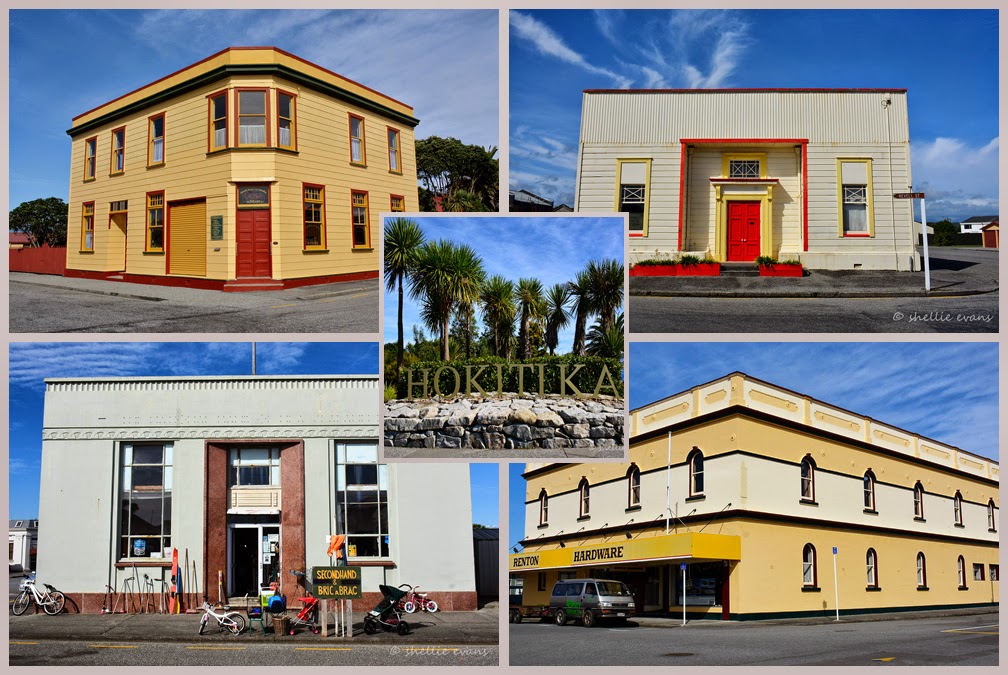
Some of Hokitika’s historic buildings- three former banks and a movie theatre.


From left to right- the art deco Regent Theatre, former Government & Courthouse Building with a statue of Sir Richard Seddon (NZ Prime Minister 1893-1906), former Custom House on the banks of the Hokitika River, the museum is housed in the historic Carnegie Library Building, opened in 1908 and funded by US steel magnate Andrew Carnegie. And the precious little Revell Street Cottage.


Another wit in town- this was across the road from the All Saints Anglican Church I was photographing.


And once again I say, this will likely be the last post for a few days. We're moving on into Arthurs Pass later today.....if the rain stops! 


January 03, 2014

Invercargill's Heritage Buildings & More

The light was just right later in the afternoon of New Years Day, bright with no sun to cast deep shadows, so I took the opportunity of clicking a few photos of the beautiful heritage buildings located around Invercargill city. And an added bonus was that there was virtually nobody about & hardly any vehicles to clutter my photos, the only negative being Christmas decorations that still adorned some buildings & streets. With Invercargill being a very small city I only had to move a block or two & then a street or two before stopping for the next photo, I would estimate that all these buildings are located within a 3km square. And they are pretty impressive for an often maligned southern provincial city. 
 

St Mary's Basilica- opened in 1905 & once described as Australasia’s “prettiest church” the neo-Classical architectural style Basilica is a dominant Invercargill landmark with it’s copper clad dome.

 
The Basilica is located across the rail line from the Otepuni Gardens where a lovely meandering path winds its way down the side of the creek & through the formal gardens.
 
 
Fleming & Company Flour Mills- opened in 1886 on the site of a wooden flour mill that was destroyed by fire, it remained operational until 2006 & is on the NZ Historic Places register. The mill is just a street away from our camp ground & just along the road from the Basilica.


Civic Theatre- The Civic Theatre is one of the most significant historical buildings in Southland & is designed in the Edwardian Baroque style. It was built in 1906 as municipal offices & has undergone a $15.8million upgrade to turn the rather tired “grand old lady” into a beautiful performing arts & events centre.


St Johns Anglican Church is next door to the Civic Theatre & designed in the Gothic Style by the same architect.

 
And just a block further down the road is the First Presbyterian Church which was designed in the Italian Romanesque style. The First Church contains over one million bricks, it was opened in 1915 at a cost of £18,181. This is one of the premier examples of church architecture in NZ, the bell tower rises 32 metres above the street & draws attention to the elaborate patterns of brickwork. Imagine following that while you're laying bricks metres off the ground. You would only have to get one wrong for it to stand out like a sore thumb.

 
Railway Hotel- Built in 1896 this beautiful building incorporates elements of Victorian, Edwardian & Baroque revival architectural styles. The hotel is one of the last remaining in NZ still being used for it’s original purpose.


Bank Corner & Trooper’s Memorial- the memorial  was erected to remember those that served in the African Boer War.

 
The former Bank of New South Wales stands on the site where Invercargill’s  commercial activity began in 1856. 
 
 
On one corner is a feature wall which has been constructed  to represent the Maori & Celtic roots of the city.
 
 
Historic buildings & facades of Invercargill City- there are many styles of heritage buildings within the inner city precinct from Arts & Craft & Nouveau/Deco to Victorian.

 
More bright & colourful city buildings including the Grand Hotel which certainly looks grand on the outside but a bit dubious on the inside!


I suppose we should be grateful that they don't demolish these old buildings but I can't for the life of me understand why the powers-that-be allow such garish paint jobs & advertising on such a lovely building. It'll be that all important dollar that does it.
 

WEA Building- The three storyed WEA building was built in 1912 as a Coffee & Spice Mill for David Strang & built in front of the original (& recently rediscovered) 1885 mill. Strang invented & patented soluble coffee powder.


The impressive Invercargill Cenotaph, c1986. This city doesn't do things in small.


Water Tower- This is a much better photo of the Water Tower than the one I posted a few days ago. The busy main road that runs along the front of the tower is closed to traffic at the moment (major road works) but I was able to pretend I was a resident & park there while I took photos.
 
The foundation stone for the tower was laid in 1888, the cupola was removed in 1934 & replaced in 1988 with the assistance of NZ Aluminium Smelters. The tower contains 200,000 common bricks, 80,000 red pressed bricks, 15,000 yellow pressed bricks & 4,000 pressed black bricks.


Southland Masonic Centre- The Masonic temple was opened in 1926 at a cost of £14,116 and is in the Graeco-Doric Style with a red brick & smooth plastered portico, supported by 6 fluted columns. The Lodge is regarded as one of the most impressive lodges in the Southern Hemisphere  & received a silver medal in 1934 from the NZ Institute of Architects.

 
And the final photo is one of the abandoned church that we can see over the back fence of the camping ground. I haven't managed to find out any history on this yet although there is someone living in there as I've seen a light on in the middle of the night. The windows are boarded up and the grass needs to be mown.


There is one more grand neo-Georgian style building I need to shoot but that will have to wait until we visit the park with the family. In the meantime I hope you enjoyed your virtual tour around lovely Invercargill City.